A Beginner's Guide to Adhesive Labels and Label Stickers: Types, Uses, and Buying Tips


A Beginner's Guide to Adhesive Labels and Label Stickers: Types, Uses, and Buying Tips
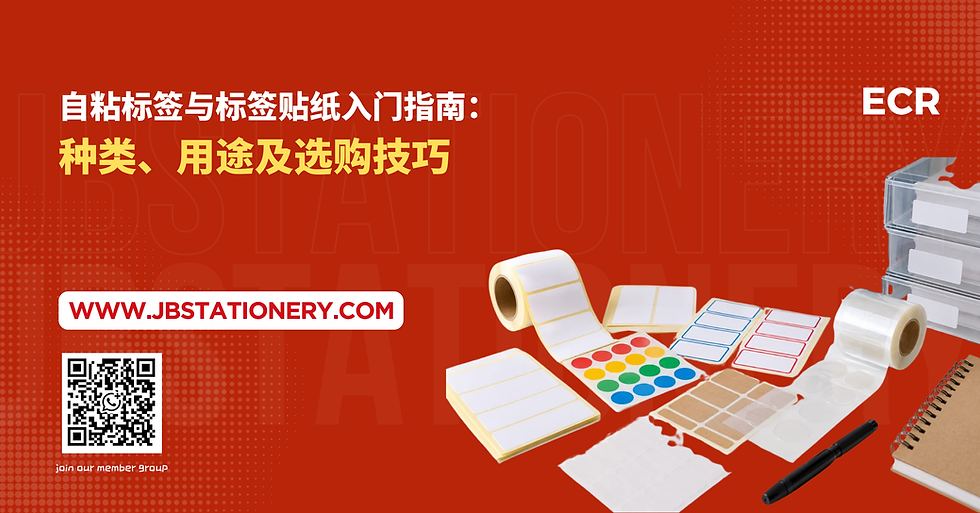
Adhesive labels and label stickers are practical stationery products used in everyday life, schools, and offices. Whether you need to organise documents, label storage boxes, sort study materials, or identify products, these stickers make it easier to organise and recognise items.
Labels are available in different sizes, shapes, materials, and adhesive strengths. Understanding their differences can help you choose the right label stickers for your needs.
1. What Are Adhesive Labels?
Adhesive labels are labels with a sticky backing that allows them to be attached directly to suitable surfaces, usually without additional glue or tape.
They are convenient to use on paper, folders, storage containers, packaging materials, and other compatible surfaces. Some labels are designed for writing, making them useful for recording names, dates, identification numbers, and other important information.
Adhesive labels are commonly used in schools, offices, retail stores, and homes. They are simple yet practical stationery supplies for everyday organisation.
2. Common Types of Label Stickers
Different types of label stickers serve different purposes. Before purchasing them, it is helpful to understand the most common options.
Blank Label Stickers
Blank label stickers are suitable for situations where you need to write your own information. They can be used to label documents, organise storage boxes, identify school supplies, or categorise personal belongings.
You can write names, dates, or reference numbers on them according to your needs, making them a flexible option for everyday labelling.
Coloured Label Stickers
Coloured label stickers help users distinguish between different categories of items. For example, students can use different colours for separate subjects, while office workers can colour-code documents and work projects.
This simple method makes categories easier to recognise and can improve everyday organisation.
Round Label Stickers
Round labels are commonly used for simple identification, categorisation, craft projects, and packaging decoration. Different colours and sizes can help distinguish items or highlight specific information.
Rectangular Label Stickers
Rectangular labels provide more space for writing names, document numbers, dates, and other short details. They are commonly used for filing, storage box labelling, and product packaging.
Transparent Label Stickers
Transparent labels are useful when you want a label to blend into the background without covering too much of the underlying surface. They can be used for certain packaging and decorative applications.
Their final appearance depends on the label material, the writing or printing method, and the colour of the surface underneath.
3. What Are Label Stickers Used For?
Organising School Supplies and Study Materials
Students can use label stickers to identify textbooks, folders, storage boxes, and other school supplies. Clear labels make it easier to sort materials and find the items needed for different subjects.
For example, students can assign different coloured labels to Mathematics, Science, and English materials to keep their study supplies organised.
Managing Office Documents
Offices often handle reports, contracts, client records, and other important documents. Using labels to identify document names, dates, or categories can make paperwork easier to organise and retrieve.
For workplaces that regularly manage physical documents, a consistent labelling system can improve filing efficiency and reduce confusion.
Home Storage and Organisation
At home, label stickers can be used on storage boxes, drawers, baskets, and containers. You can create separate labels for stationery, craft materials, household items, and seasonal belongings.
This makes it easier to identify stored items without opening every container.
Product Packaging and Craft Projects
Label stickers are also useful for gift wrapping, handmade cards, journaling, and selected product packaging applications. Choosing suitable colours, shapes, and sizes can make packaging look neater and more organised.
If labels are intended for product packaging, consider whether the material is compatible with the packaging surface and whether the adhesive provides sufficient hold.
4. How to Choose the Right Label Stickers
When shopping for label stickers, consider the following factors.
Size and Shape
Choose a label size that matches the amount of information you need to include and the surface where it will be applied. Small labels are suitable for simple identification, while larger labels provide more writing space.
Material
Common label materials include paper and synthetic materials. Paper labels are suitable for general document organisation and everyday identification. Synthetic labels may be more appropriate for certain applications that require greater resistance to wear or moisture, depending on the product specifications.
Adhesive Strength
Different labels have different adhesive properties. For labels that need to remain attached for a long time, choose a product designed for that purpose. If you need removable labels, check whether the product is specifically designed to be removed easily.
Test the label on an inconspicuous area first to reduce the risk of adhesive residue or surface damage.
Writing and Printing Requirements
If you plan to write on labels by hand, choose a surface compatible with your preferred writing tools. If you want to print labels, check that the label sheets are compatible with your printer's size, material, and operating specifications.
Intended Environment
If labels will be exposed to moisture, heat, or frequent friction, check the product's durability information carefully. Ordinary paper labels are not necessarily suitable for damp or outdoor environments.
5. Tips for Using Label Stickers Effectively
Follow these simple tips to get better results from your label stickers:
- Keep surfaces clean: Remove dust, grease, and moisture before applying labels to suitable surfaces.
- Use a consistent system: Establish clear labelling rules for different documents and items to avoid confusion.
- Write clearly: Keep label information short, readable, and easy to recognise.
- Choose the right position: Place labels where they are easy to see without covering important information.
- Test before applying: For delicate surfaces or removable labels, test the adhesive on a small area first.
With a few simple organisational habits, even basic label stickers can make studying, working, and home storage more convenient.
Conclusion
Adhesive labels and label stickers are simple yet useful stationery products for schools, offices, homes, and product packaging.
From blank and coloured labels to round, rectangular, and transparent stickers, each type serves a different purpose. Understanding the material, size, adhesive strength, and intended environment can help you select the most suitable product.
If you are shopping for stationery or storage supplies, consider choosing label stickers that match your everyday needs and make organising items easier and more efficient.
🎯 Focus on what matters most and boost your office efficiency!
Let ECR Office Solutions be your dedicated stationery manager—no more last-minute dashes to the store when you run out of supplies!
🎯 Contact us for more details.
🎯 WhatsApp Community.


Comments